Montag, 29. November 2010

How do I study Go?

I have been asked this question frequently. Here I shall explain to everybody how I study Go.


For that purpose, let me slightly modify the question. How Do I study Go?

A Japanese top pro player (if you know who it was, I'd appreciate it if you told me) once said that ordinary people cannot understand how he studies Go. When asked about details, he answered "I study Go by watching the trees blossom."

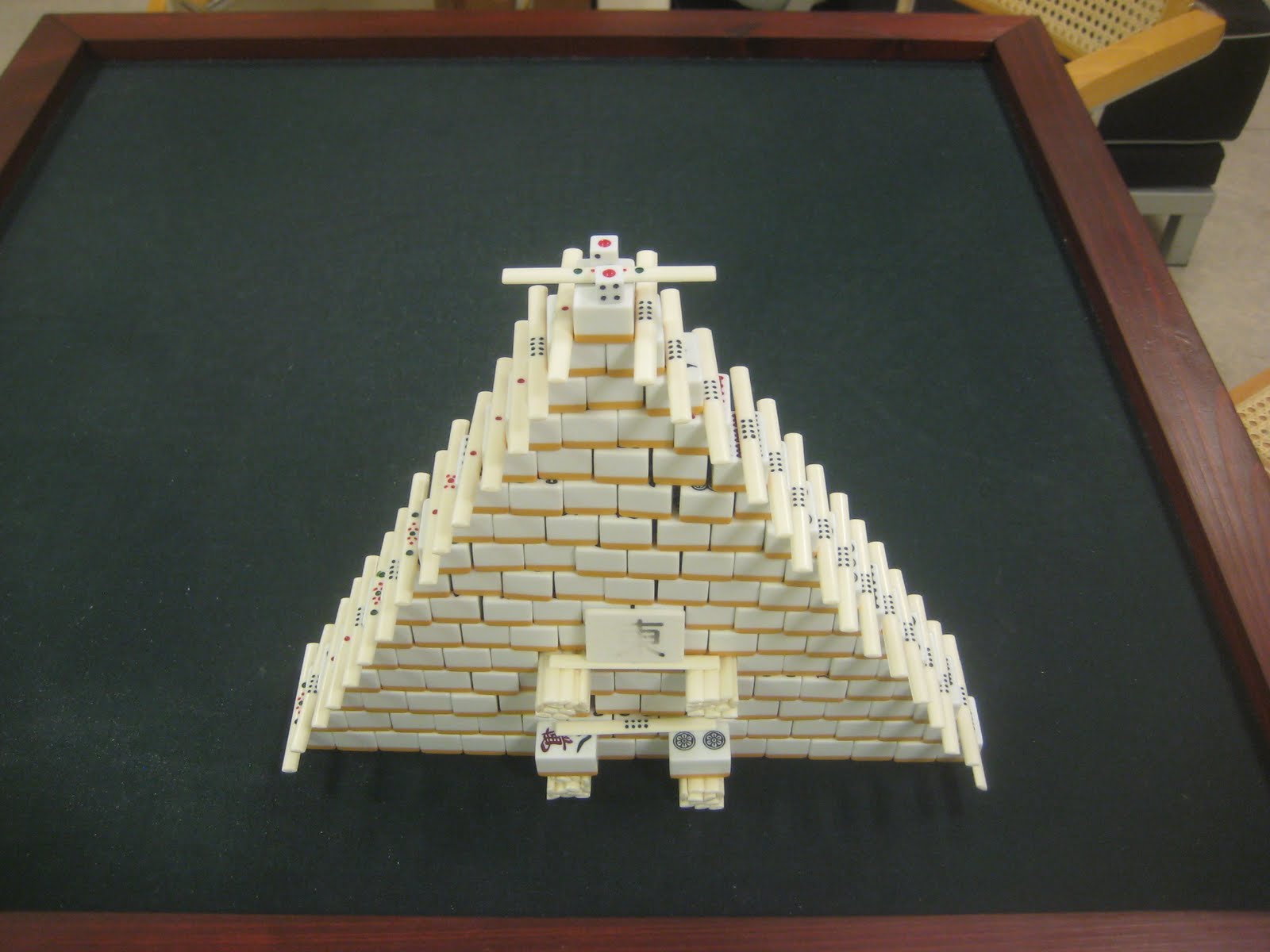
The thing is, nowadays I am sort of lazy to open the book and place stones on my awesome home-stuck Go board (in the picture below).


But don't take this as an excuse for not studying. I was very studious when I was still young and promising. In every spare moment, I would solve tesuji problems, replay pro games, study joseki, compete with my rivals and so forth. I was also blessed with the presence of Kobayashi Chizu 5p sensei who taught and spread Go in Vienna for one and a half years. It was also due to her ambition that a few Master Courses with top Japanese pros such as Takemiya Masaki 9p and Aoki Shinichi 9p had been organized.


Of course I also attended (and still attend) a lot of Go tournaments and met a lot of cool people.

This all helped me to improve and solidify my knowledge and feeling for Go.
I would still like to improve, but I am either too lazy or too busy or both nowadays.

Even though I do not study Go as frequently as before, I have found a lot of similarities between Go and other things, say, other games, language, music, nature, also in real life. Imho everyone should find their own enlightenment, so I'll save emy breath, or ink, or whatever, for telling you how I study Go nowadays.

Like the pro studies Go by watching trees, I found that I got stronger at Go by watching anime.
Below you can see my personal heroes:

Akagi Shigeru, the genius who descended into darkness
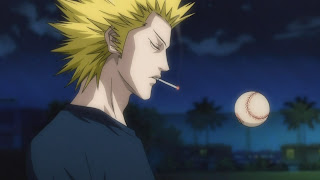
Tokuchi Toua, a clone of Akagi

(thanks to Namii who introduced them to me:D)
They are really ugly, but both of them are masters at their field (Mahjong and baseball repectively) and have not lost a single game.

They cannot teach me Go moves, but there is a lot more involved in a game than just the moves. I have even been defeated at the first move by those factors beyond the goban. If you are one of those people who don't care for such things, then I will have a hard time beating you too:P


Last weekend at Kranich tournament I had to play my little Finnish rival. Imo I successfully turned his unusual opening into a disadvantage for him, then I messed up big in the middle game, and after a byoyomi-flawed endgame it turned out to be a 2 points victory for me.
I think that I wouldn't have won it if I hadn't watched One Outs the week before and listened to Tokuchi Toua's teachings. On the other hand, if my opponent had done that too, I would have lost the game (probably by time or resignation).

I hope I could answer some of your questions and don't forget to study this site to get stronger:)

Oh, and this one is awesome too. Of course everything is for free! (But you are still welcome to donate!)
Samstag, 20. November 2010

Spielefest 2010

Yet again the Austrian Go Federation infiltrated the Games Festival to promulgate (lol what a word) Go to the world.


Contrary to the Sports Festival, where Go was relatively complicated compared to the other sports, it had the simplest rules among all board and card games this time. Only some games involving hitting a ball somewhere and the spinning wheel of fortune could outrule this suspicious looking game in terms of simplicity. (I won a t-shirt, two puddings and a drawing set spinning the wheel:) ).


Although I was there only on one of the three days this event took place, I was kinda overwhelmed by the number of visitors. Estimations score up to 10.000 visitors.


This time quite a few people got stuck to this game and they wouldn't stop playing it. Out of the people I took care of, there was a cool couple who had a peaceful and consensual playing style, and a father and his son who discovered the very depth of this game's complexity well concealed behind its seemingly simple rules. (Well, they are simple, but there are experts who would rather make them look complicated, too.)

They were all very talented and I am looking forward to meeting them again.


They also took part in the simultaneous games where they had to face Li Ting 1p (whom I have beaten once out of countless encounters in my life at Go in an even game:D, I also beat her at 3-dimensional TicTacToe at the games festival) who was imported from Japan just for this occasion. With anonymous help eventually one person managed to beat her in their simultaneous game! Very talented, and the anonymous dude too^^


Last, but not least, I shall mention the head guy and head woman of Kasu, an organisation with the aim of speading Japanese games, best known for playing Riichi Mahjong. Somehow they also got dragged into the flow and became fascinated of Go.


Btw you might have noticed that the pictures are kind of blurry. That is because my camera is not working properly anymore. I cannot change the settings nor see the pictures it takes until I copy them to the computer. If you want to see better quality pictures, feel free to donate for a new camera:D
(donations so far: 0.20€)

Sonntag, 24. Oktober 2010

Mannheimer Aji 2010

Einer meiner Fans, ein Hauptorganisator des Turniers, bei dem ich übernachten durfte, meinte, ich sollte unbedingt etwas übers Mannheimer Aji schreiben.
Also ja, ein sehr cooles Turnier, nächstes Jahr unbedingt kommen. :)
Das Turnier brach heuer (dieses Jahr) die Tradition, am Wochenende der Zeitumstellung stattzufinden, aber entgegen meiner Befürchtungen haben am Sonntag nur die nicht mitgespielt, die aus feierlichen restalkoholischen Gründen dazu nicht in der Lage waren.


Leider hab ich nicht viel von Mannheim gesehen, bzw. angeblich habe ich schon alles Sehenswerte gesehen.
Die Mannheimer Innenstadt ist wie ein Gobrett in Quadrate mit Koordinaten eingeteilt. Allein dafür lohnt es sich eigentlich, nach Mannheim zum Turnier zu fahren und sich gobrettmäßig zu fühlen.

Heuer waren Cho Seok-Bin 7d als Live-Kommentator und die als Mangakünstlerin zu Ruhm gestiegene chidori am Turnier anwesend. Chidori hat mich wieder gemalt und mir ist aufgefallen, dass ich wie L ausschaue.


Ich übernahm übrigens zeitweise vorübergehend den Bücherverkaufsstand und konnte mit meinen Werbesprüchen viele potentielle Kunden begeistern und sogar einen zum Kauf bewegen.
Die angebotenen Bücher vom Brett-und-Stein-Verlag waren nämlich ausschließlich in deutscher Sprache und daher waren Englischkenntnisse nicht notwendig, um den Text zu verstehen (wobei, wer schaut in Gobüchern schon auf den Text). Ich bin außerdem mit den Büchern mehrmals 5d geworden (bis ich aufgeflogen bin, ich spielte das Aji als 4d) und auch DU bekommst um nicht einmal 20 € so ein Buch gratis.


Ein besonderes Highlight war das Massenrengo. Es wurde jeder Zug und deren Zieher mehr oder weniger erfolgreich aufgezeichnet. Jeder durfte mitmachen unter den Voraussetzungen, dass jeder immer nur für die selbe Farbe spielt und nicht mehr als jeden 5. Zug seiner Farbe macht.
Es kam im Joban (Eröffnung) gleich zu einem interessanten, kreativen oder auch innovativen Furikawari (Austausch), wo schwarz den fünften Zug im Nadarejoseki (Lawinen-Eckabspiel) tenukierte (ignorierte und stattdessen auf einer anderen Hälfte vom Brett einen Stein hinklatschte), -was dem Spieler auch direkt eine gewisse Bekanntheit einbrachte- wonach niemand mehr für Schwarz spielen wollte, bis ich Seok-bin-sensei* rekrutierte mit der Bitte, er möge retten; danach lief die Partie relativ flüssig und normal wieder weiter.
Dieses Massenrengo begeisterte unter anderem die im Bild zu sehenden Kiddies, die es gar nicht abwarten konnten, bis sie wieder am Zug waren. Sie waren so vertieft in die Partie, dass sie unter anderem mich verwundert ansprachen, als ich meinen Zug gespielt hatte (was mich immer noch sehr erheitert): "Ey, was machst du!"


*Die Bezeichnung sensei 先生 lässt sich auf zwei Arten herleiten.
Was japanische Volksschulkinder lernen, ist 先に生まれた saki ni umareta, also "(wurde) zuerst geboren". Tatsächlich ist jemand, den man sensei nennt, theoretisch vorwiegend fortgeschritteneren Alters als man selbst. In japanische Kabaretts aber kommt sensei von 先ずは生きてる mazu wa ikiteru, also "Hauptsache noch am Leben".

Sonntag, 26. September 2010

Tag des Sports


The Heroes' Square in Vienna held a festival yesterday on Sports Day.


Of course Go could not be missed at such an event. Our stall was located in the periphery of the square, next to the Poker and the Square dance.


There were several unfavourable circumstances, like the rainy weather forecast or the computer games event which was being held on the same day and had ads in every metro station unlike the Sports Day which I only heard about the day before.
Nevertheless the event was well-visited, not inferior to last year's.
There were quite a few people who came to the Go to have the rules explained.
The number of people who will show up at the Go club one day is a michisuu (未知数, unknown quantity).


In my opinion Go fails at such events in terms of presentation and attractiveness. The objective in this sport isn't as obvious as hitting the ball/target/other person.

Even though there were a lot of people who were interested in this game.
A few examples of how they reacted:
-Is this game from China or Japan?
-Of course this is from Japan, I know this from the crosswords.
-This looks complicated. Let's go.
-Can we eat this?
-Ah let's wait under this tent until the rain stops.

My favourite not-anymore-non-go-players were two kids who seemed to have a go set at home already:
-This is a cool game. Now we know how it works.
They cleared my doubts that go would have no chance amongst all the other kinds of sports.


Yet again it seemed that the shorter the explanation of the rules, the more the interested people were inclined to try out the game; especially because the other attractions at this event had obvious and simple rules too.

It was also important that more go players gathered at the same place, even if they only played against each other, in order to look more organized. It also proved useful to have ongoing games for explaining the rules to the astonished spectators:
-This game is about who surrounds more territory with his stones. This area is white's points, and this is black's. This is not sure yet. and so on
This saves a lot of talk about rules because it was obvious that the two players on two sides of the checkered board place black and white candies respectively and alternately
on the intersections of the lines on the board.


One of the highlights for me was when I noticed that McDonald's sponsored this sports event.

Freitag, 10. September 2010

Nichtgospielervernichtung at Japanfest

After a successful sweeping of non-go players at AniNite two weeks ago (rumors have that a certain go dude seduced about 20 girls to the go club), the valiant go players of Vienna went to the Japan festival to annihilate some more non-go players.


Besides this divine game, the festival also provided Japanese calligraphy, Japanese manga, Japanese origami and Japanese expensive food and a stage for Japanese music, Japanese martial artists, Japanese dancing, Japanese kimono show and music.


My favourite victim this time was a 9-year-old Japanese boy who spoke little German. He fell in love with the game at first sight and played no bad moves despite not knowing the rules in his first game. He even won his second game against me (with my help^^) after which he probably grasped the rules. Later he insisted on playing a third game with me, in which he finally started playing first-line fuseki moves and broken shapes.
Perhaps someone should relay to Robert Jasiek that knowing the rules better makes you weaker.
(I also won my first game of Settlers of Catan and got crushed in the second game after figuring out what was going on.)


It is very hard to explain the rules to newcomers, so that:

-they understand the rules
-they don't get confused
-they don't start playing stupid beginner shapes
-they don't get scared off the game because the rules are so "complex" and never want to play a game again

The Austrian Go champion 2007 came up with this way of explaining rules, skipping the first point:
Lothar Spiegel: "Also das Spiel heißt Go. Es ist das älteste Brettspiel der Welt, älter als Schach. Schach ist böse. (spielt ein paar normale Fusekizüge auf dem 9x9-Brett) Es geht darum, Punkte zu machen. (zeigt auf das Gebiet, das seine Züge einschließen) Wer mehr Punkte macht, hat gewonnen. So, jetzt spielts eine Partie und ich erkläre euch den Rest der Regeln nachher."
Opfer: (Gekicher) Ok. (spielen gute Züge)

(loose translation)

Lothar mirror: So this is Go, the most awesomest game in the world. (talks while playing against himself) It is about making points. (strokes the board) The winner is who makes more points. So now play a game and I will explain you the other rules afterwards."
the victims: Hm Ok. (play good moves)

Dienstag, 17. August 2010

Mein Kampf gegen Nichtgospieler / My battle against non-go players

Heute machten sich 3 tapfere Gospieler auf, der Welt das Gospiel näherzubringen und Nachwuchs zu rekrutieren. Beim Go7, wo sie sich mit Material ausstatteten, starteten sie ihre Reise und kamen ihrer Mission bei einer Besichtigungstour durch die Wiener Innenstadt nach.


Three little Go players initiated the plan today that they secretly worked out. With munitions stolen from the Go club, they went around in my hometown to carry out their mission of annihilating all non-go players.


Leider war es nicht sonnig genug, also konnten nur zwei Personen das Spiel kennenlernen, eine davon war sogar interessiert: eine nette Dame, die uns Zeitung und Comics verkaufen wollte, und eine andere, die uns Essen brachte und danach Geld von uns wollte.

Due to suboptimal weather situation total annihilation was not possible. Only two persons fell victim to the sinister messengers of mischief.


Oh Gospieler, die ihr dies lest! Vereinet eure Macht und erzeugt Gospieler!